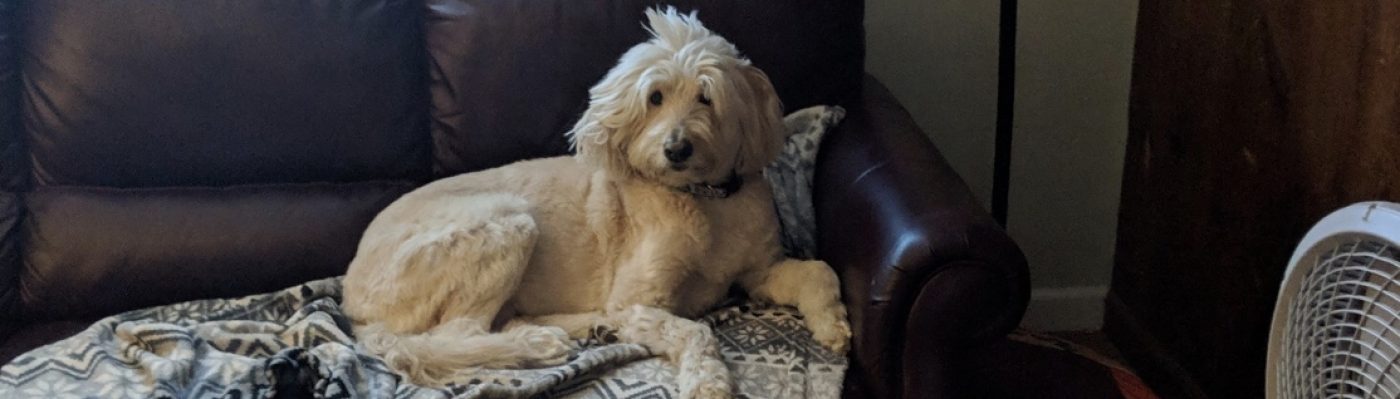
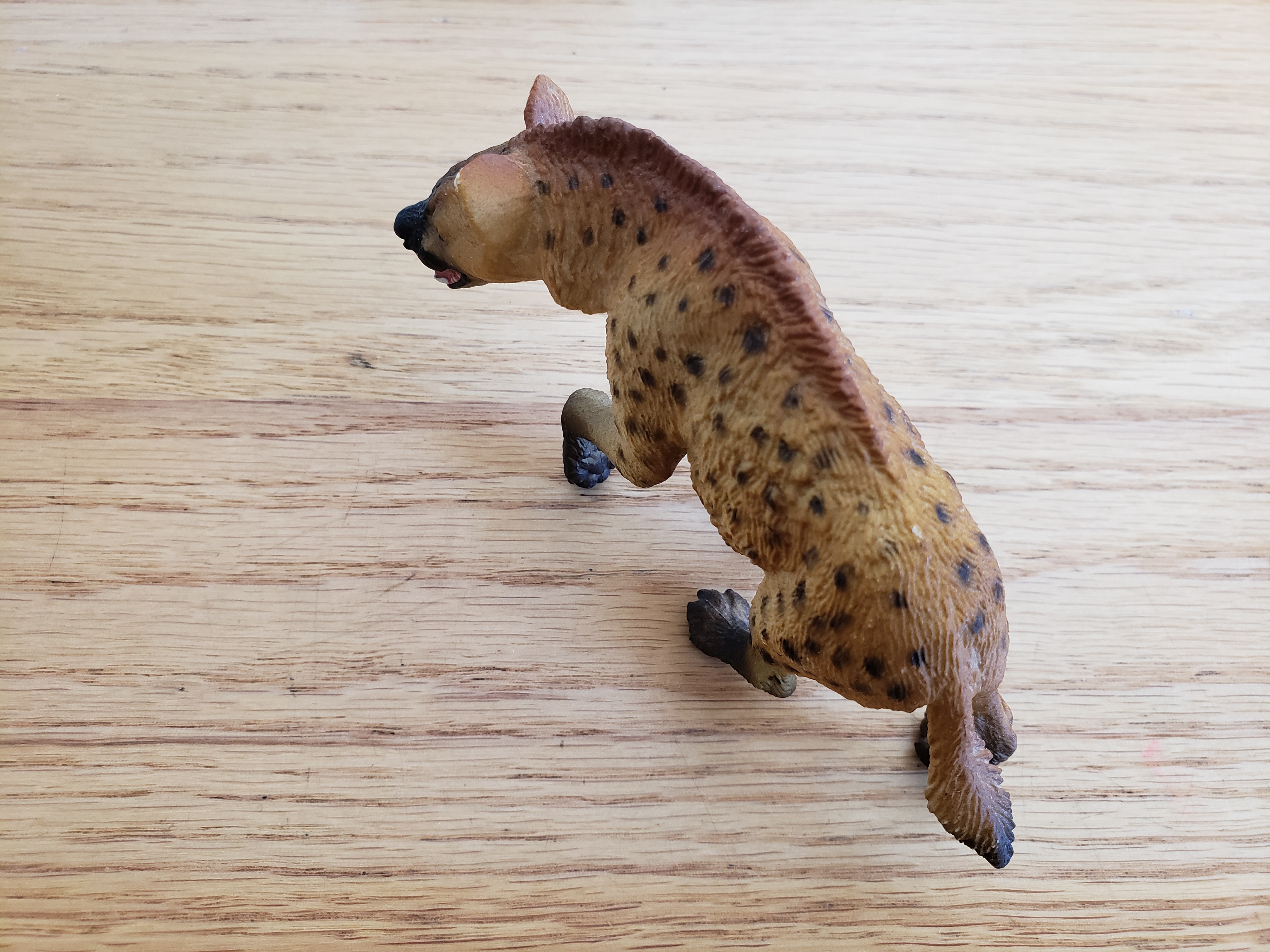
For this study of camera techniques, I decided to use a hyena figurine I bought from a zoo gift shop (I haven’t named him) as my subject. Originally I considered using a statue on my college campus, but the hyena seemed like more of a challenge since it isn’t humanoid.
This severe high-angle shot gives the impression of looking down on the hyena and makes him seem small to the viewer, and by extension weak. This kind of shot would be good for imperiled or disadvantaged characters.
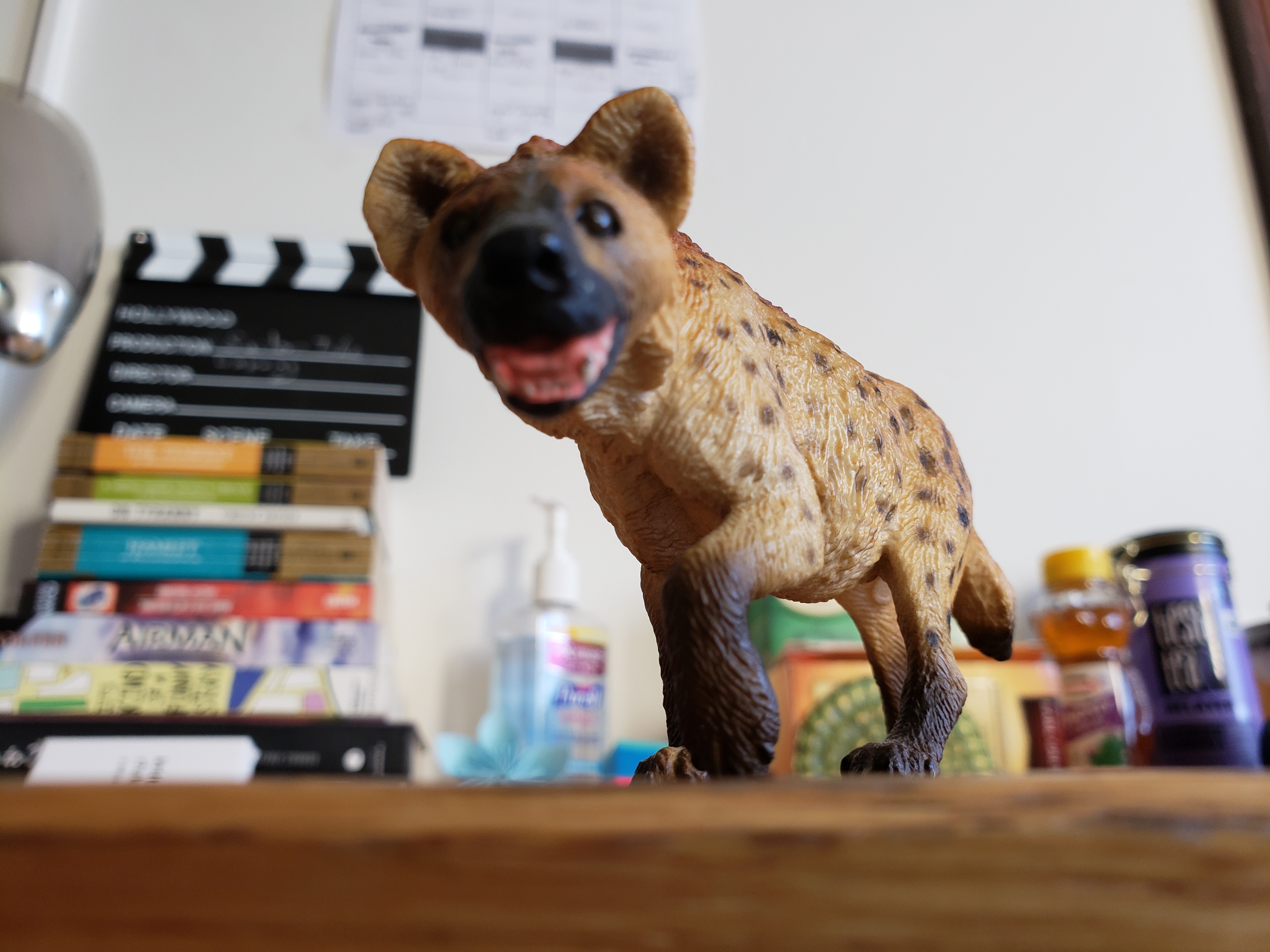
Low-angle shots like this one do the exact opposite: the hyena looms over the viewer menacingly, making him literally seem taller and more imposing than he is. I thought about redoing this shot because of the blur on the hyena’s face, but I liked how it made him seem closer (though that might just be my farsightedness).
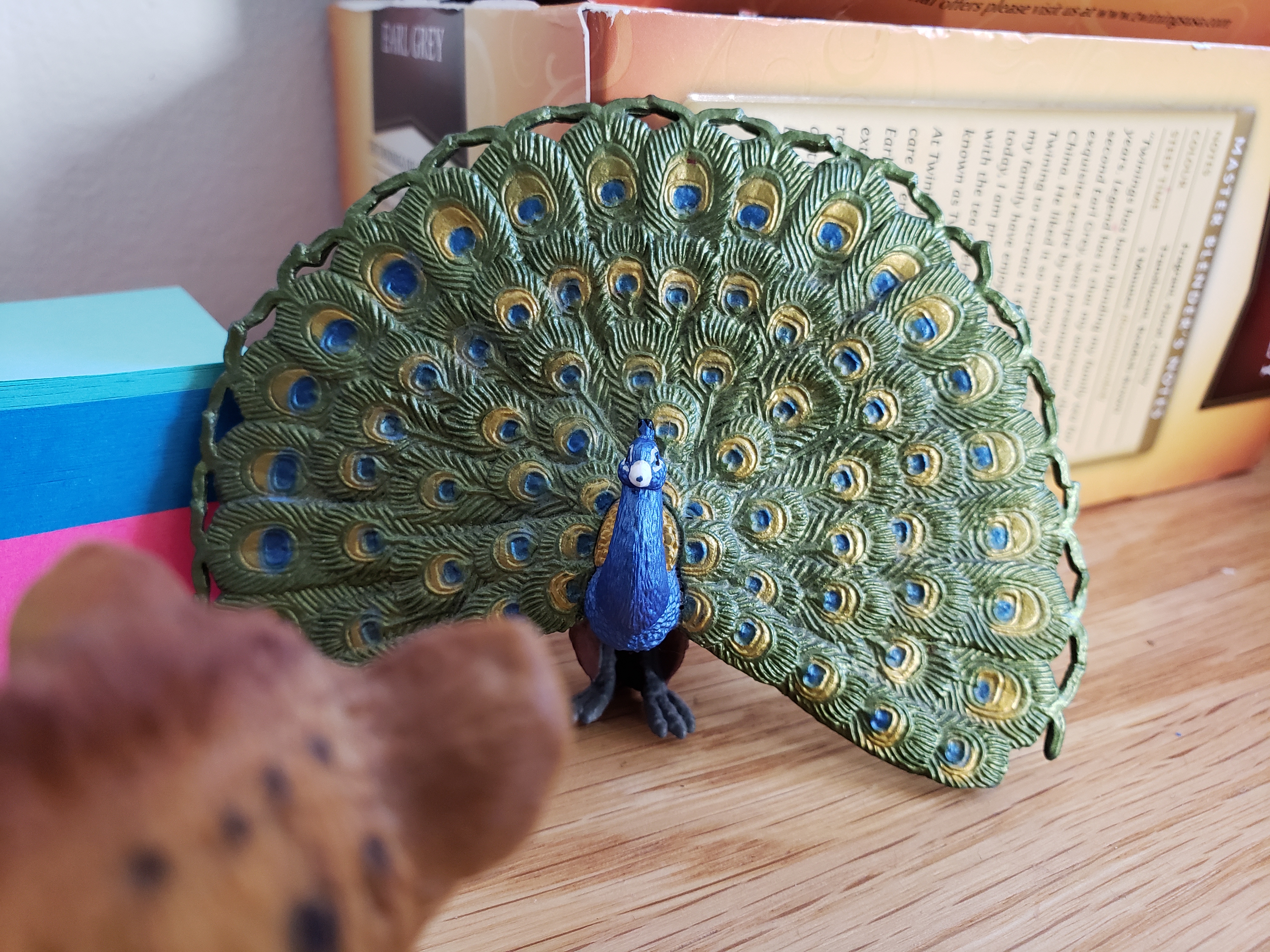
While over-the-shoulder shots are usually used for dialogue, it can also be used when a character is sneaking up on another. I couldn’t quite decide between the two here, because the peacock obviously notices the hyena approaching. Over-the-shoulder shots are a seamless way to shoot dialogue.
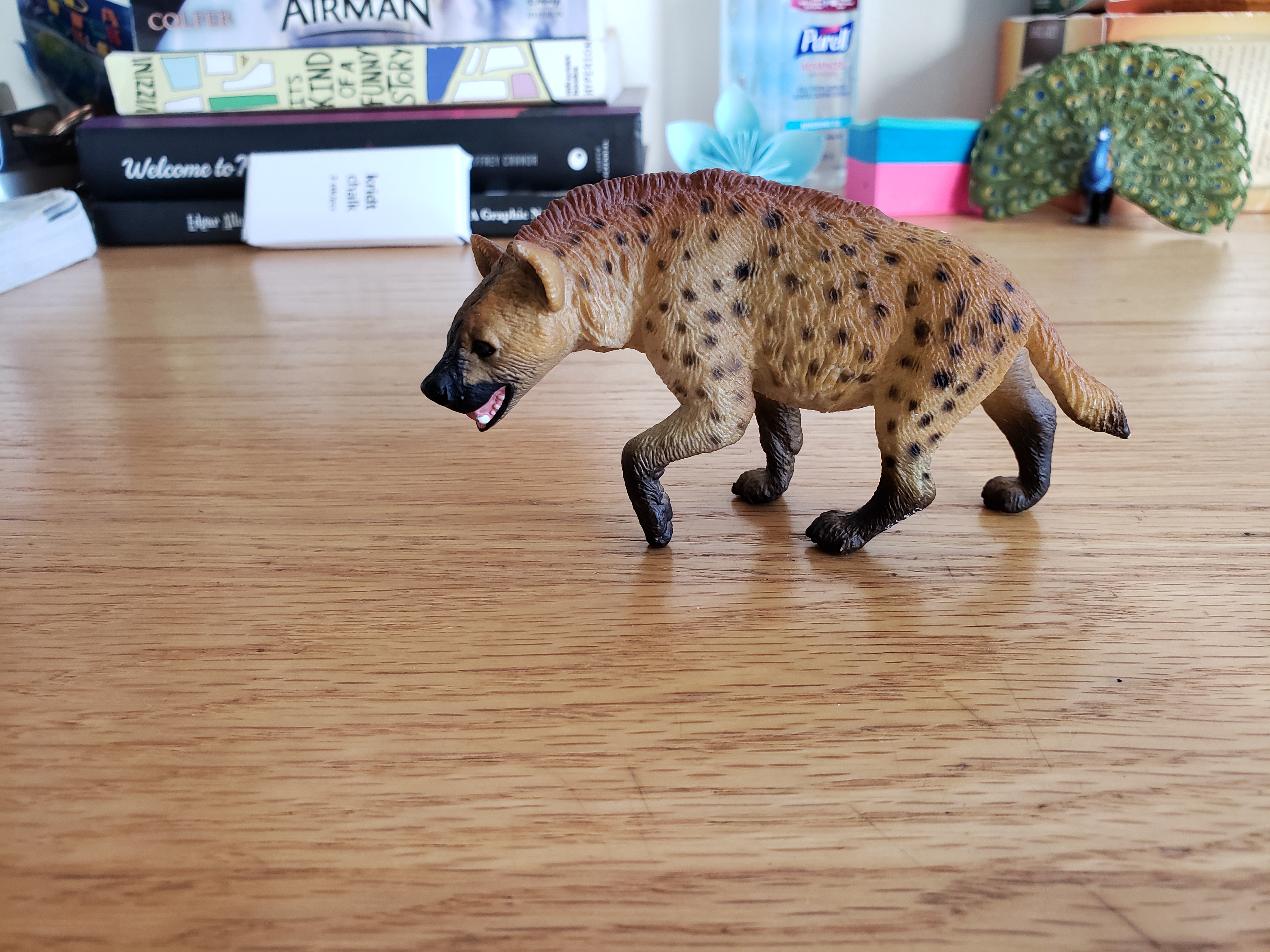
The Rule of Thirds requires some explaining. According to this rule, if the frame were split into a 3×3 grid, putting the subject on one of those dividing lines should be aesthetically pleasing. I put the hyena where two imagined lines would intersect in the upper right. I think the Rule of Thirds adds a sense of order to a shot when used conventionally; it would be strange if I put the hyena in the lower left corner instead because we want to see the path he’s walking.
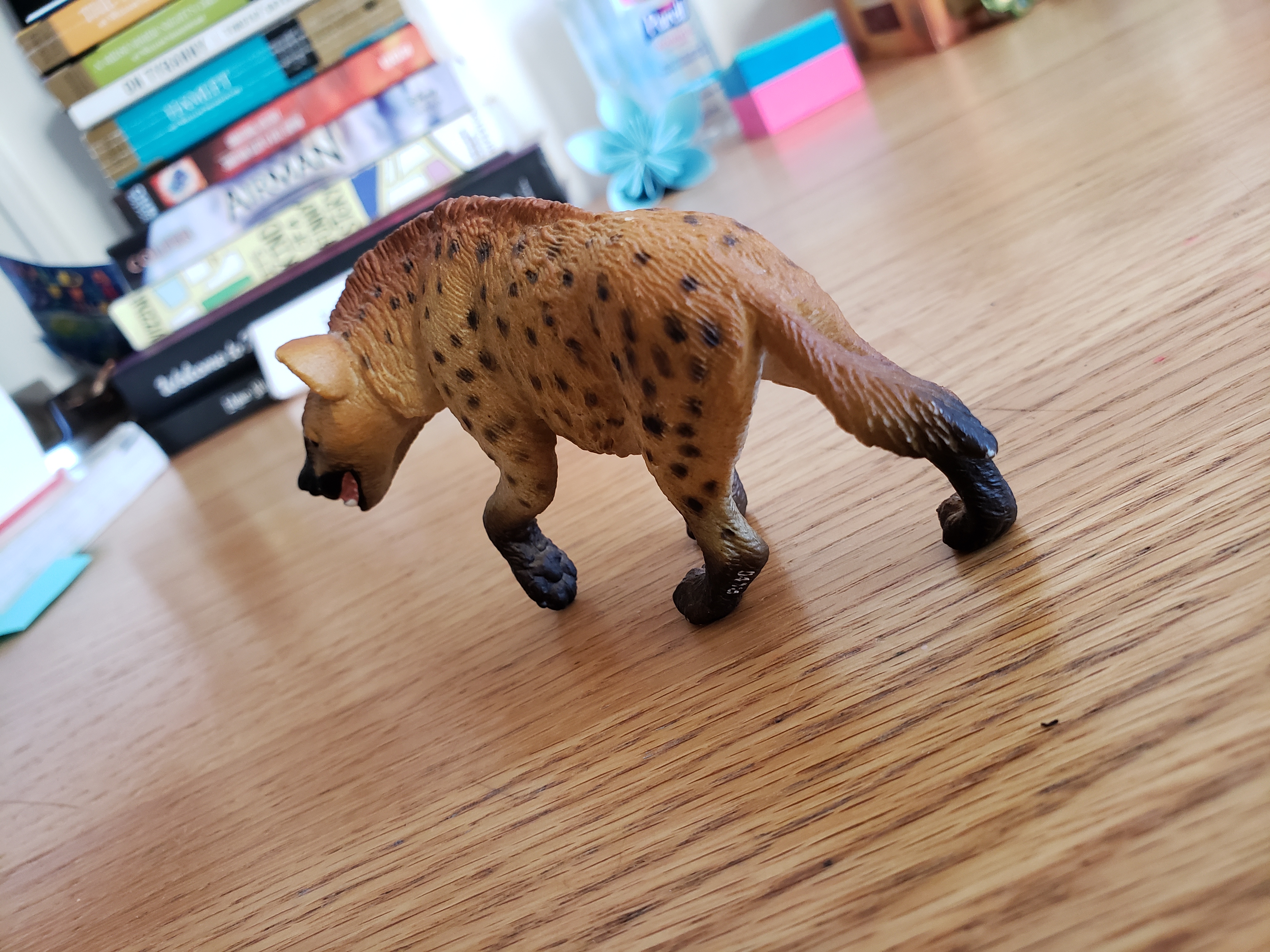
The Dutch tilt is used to suggest disorientation and/or a loss of control. I’m not sure how this non-poseable hyena figurine would convey confusion; maybe the hyena could be imagined as limping, so he doesn’t feel as in control of the situation as he did in the low-angle shot.
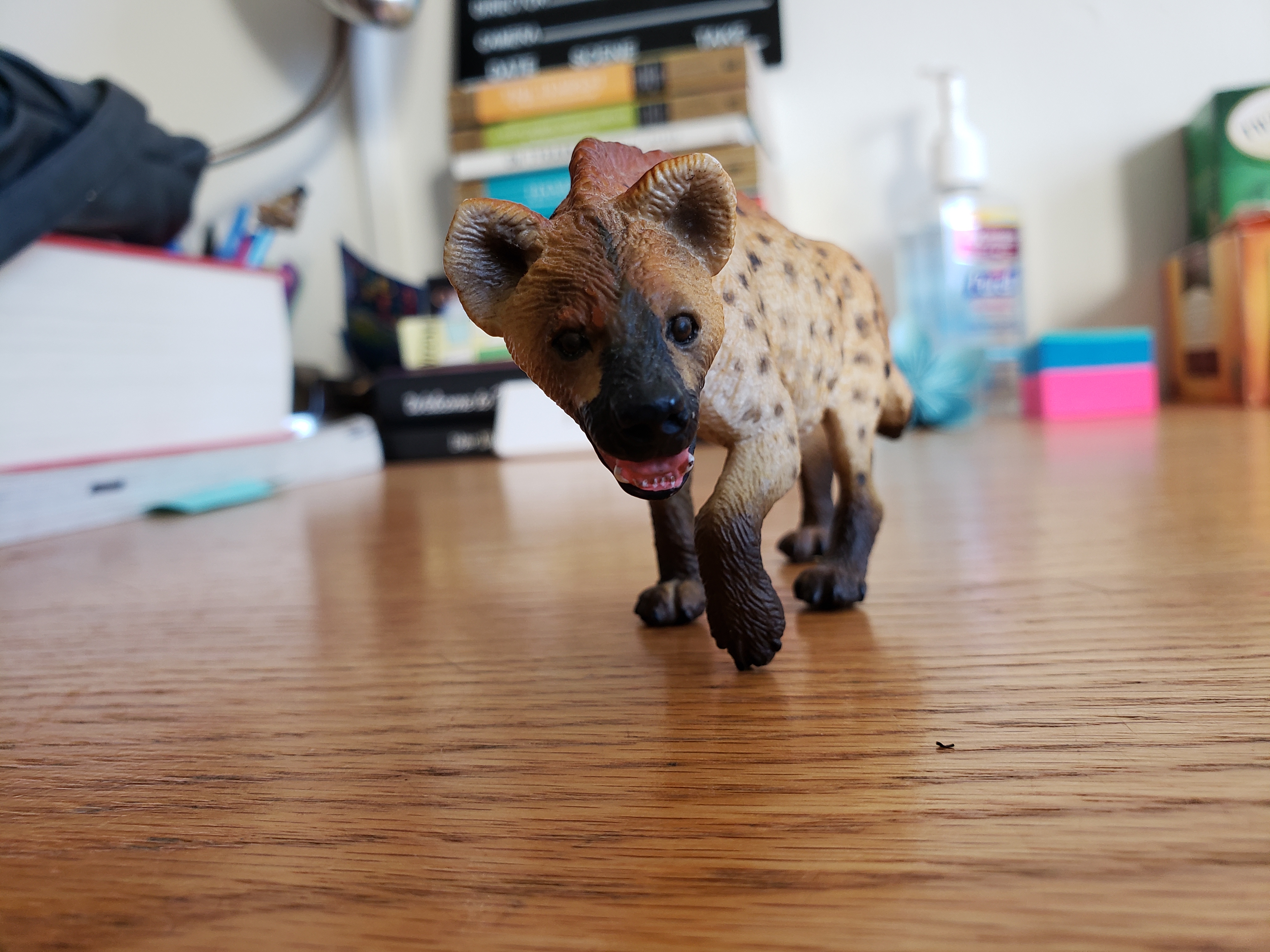
The eye-level shot is just what it sounds like. This shot, with the hyena looking straight at the camera, makes him seem a little curious to me. The out-of-focus background behind him gives him a nice sense of depth. However, eye level shots don’t have to be so centered on the subject.
 Storytelling